Launching an OTT platform is one of the most complex digital infrastructure projects a company can undertake. On the surface it appears relatively simple: acquire content, put it online, offer subscriptions, and let users watch. In reality, the difference between a platform that scales cleanly and one that becomes a permanent source of technical debt, high operational costs, and slow feature development is decided at the infrastructure level — often months before the first subscriber ever logs in.
Many organizations underestimate this reality. They invest heavily in user interface design, marketing, and content deals while treating the underlying systems as something that can be improved later. This approach almost always leads to the same outcome: delayed launches, rising costs, fragile integrations, and a platform that becomes progressively harder to evolve.
This article provides a detailed examination of the six critical infrastructure layers that determine whether an OTT platform will succeed long-term. It is written for technical decision-makers, network engineers, product leaders, and operators who want to avoid the most common and expensive mistakes.
1. Content Ingestion and Preparation Layer
Everything begins with how content enters the platform. A production-grade system must support a wide variety of live input methods, including SRT, RTMP, MPEG-TS over UDP or RTP, and HLS pull. At the same time, it must handle large VOD libraries efficiently through bulk upload, watch-folder automation, and API-based ingestion.
Once content is inside the system, it needs to be prepared for delivery. This includes transcoding into multiple adaptive bitrate ladders, packaging into modern streaming formats such as HLS, DASH, and CMAF, and applying multi-DRM protection (Widevine, FairPlay, and PlayReady). Metadata enrichment, artwork management, and quality control checks should also be part of the automated pipeline.
Operators who rely on manual processes or a collection of disconnected tools quickly discover that scaling the content library becomes slow and error-prone. Every new channel or VOD title turns into a small project rather than a routine operation. A well-designed ingestion and preparation layer turns this into a repeatable, largely automated workflow.
2. Origin and CDN Architecture
The quality of the viewing experience depends heavily on how content is stored and delivered to end users. A robust origin architecture with proper shielding protects the source of truth and reduces unnecessary load. Combined with a flexible multi-CDN strategy, it allows operators to optimize for both cost and performance across different regions and network conditions.
One of the most efficient approaches is to package content once and then make it available for both unicast delivery over the public internet and multicast delivery inside managed networks. This dual-output capability eliminates the need to maintain separate packaging pipelines and reduces operational complexity.
Poor origin and CDN design usually manifests as higher-than-expected bandwidth costs, inconsistent quality across regions, and difficulty scaling during major live events.
3. Middleware and Entitlement Control
The middleware layer functions as the control plane of the entire platform. It is responsible for user authentication, subscription and package management, concurrent stream limits, geo-restrictions, parental controls, session handling, and device management.
A common architectural mistake is to treat live television, video-on-demand, series, and catch-up as separate products with separate entitlement systems. This creates fragmented logic, inconsistent user experiences, and significant overhead every time a new commercial model or device type is introduced.
A unified entitlement engine that handles all content types under the same ruleset dramatically reduces complexity and makes the platform much easier to evolve commercially.
4. Native Player and Device Ecosystem
End users do not interact with your backend systems. They interact with the player. The quality of the applications on Android TV, Google TV, Samsung Tizen, LG webOS, Amazon Fire TV, mobile devices, and web browsers has a direct impact on perceived service quality, retention, and support costs.
Native applications consistently outperform cross-platform web wrappers in terms of performance, remote control usability, launcher integration, and long-term maintainability. While web-based approaches can accelerate early development, they often create limitations that become costly to resolve later.
5. Monitoring, Observability, and Analytics
Operating an OTT platform without strong visibility is equivalent to flying blind. Technical teams need real-time insight into stream health, buffering ratios, error rates, bitrate distribution, and CDN performance. At the same time, product and commercial teams need clear data on concurrent viewers, watch time, content popularity, and early indicators of churn.
When technical monitoring and business analytics live in completely separate systems, important correlations are missed and response times increase. A unified observability layer that serves both technical and business stakeholders is a significant operational advantage.
6. Multi-Tenancy and Long-Term Scalability
Many platforms begin as single-tenant systems and only later attempt to support multiple brands, hotels, residential properties, or white-label partners. Adding true multi-tenancy after the fact is one of the most expensive and disruptive migrations an operator can undertake.
True multi-tenancy requires clean isolation of branding, content packages, subscriber data, and configuration, while still allowing centralized management and reporting. Platforms that are designed with this capability from the beginning avoid major architectural rework as the business grows.
How Ottip Addresses These Requirements
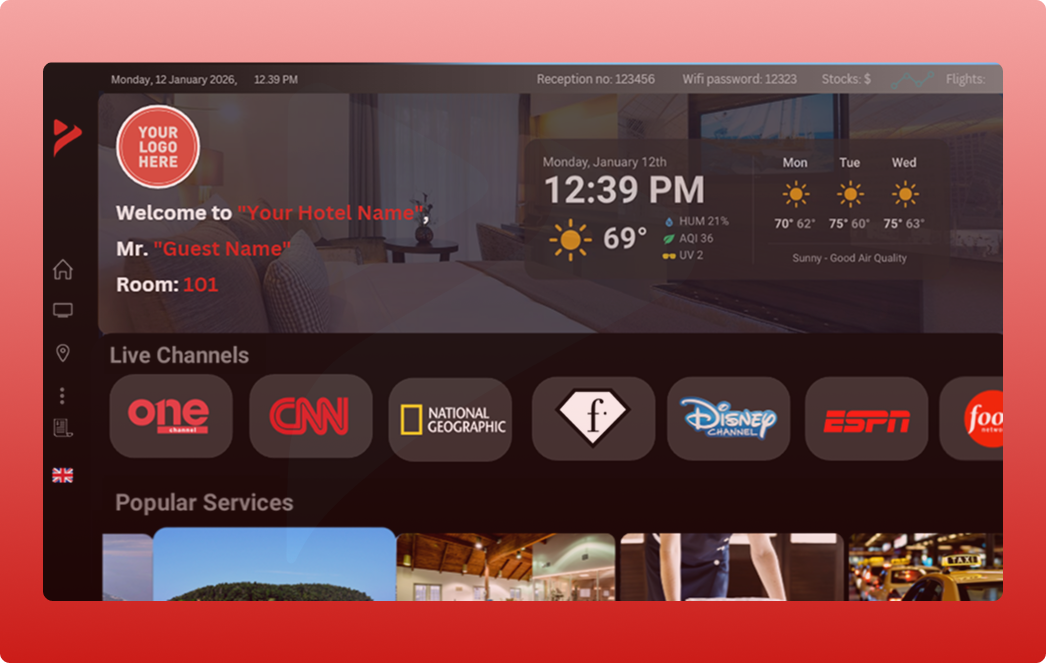
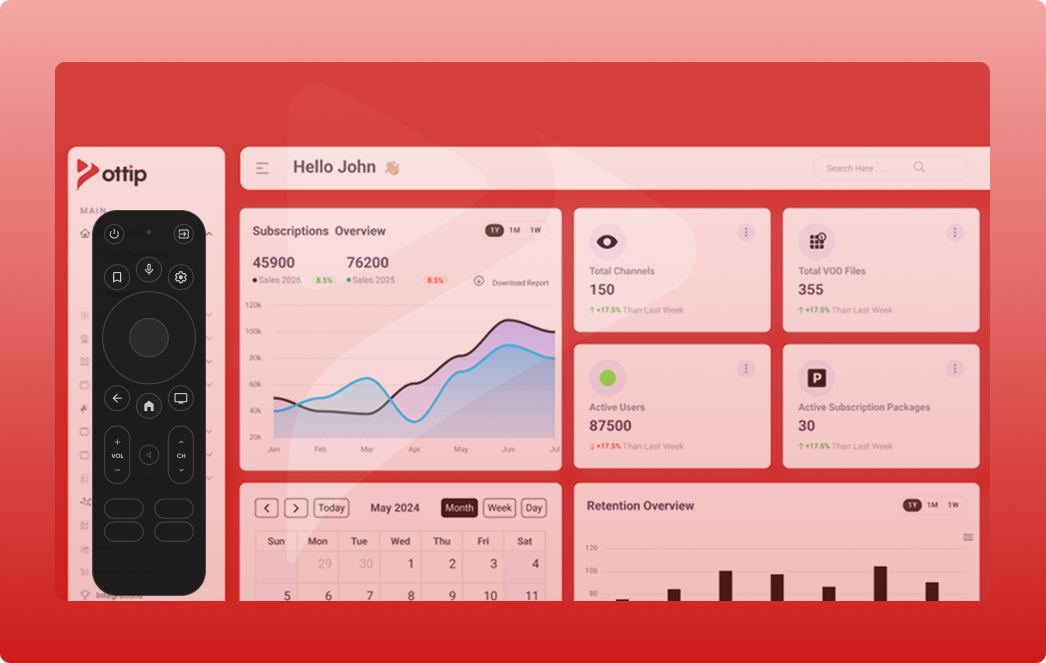
Ottip was designed from the ground up to address all six infrastructure layers within a single, coherent platform. It provides unified content ingestion and preparation, flexible origin and delivery options (including both multicast and unicast), a powerful entitlement and packaging engine, native player support, comprehensive monitoring, and true multi-tenancy.
This integrated approach allows operators to launch faster, reduce operational overhead, and scale without constantly rebuilding core systems.
Conclusion
The success of an OTT platform is determined less by the quality of its user interface and more by the strength of its underlying infrastructure. Teams that invest early in the right foundations spend significantly less time fighting technical limitations and more time improving the product and growing the business.
If you are planning to launch or re-architecture an OTT platform and want to avoid the most common infrastructure pitfalls, Ottip offers a proven, unified foundation used by operators who need both speed and long-term scalability.
Ready to build on solid infrastructure?
Request a technical deep-dive demo with our team and see how Ottip can support your specific requirements.